Follow the water
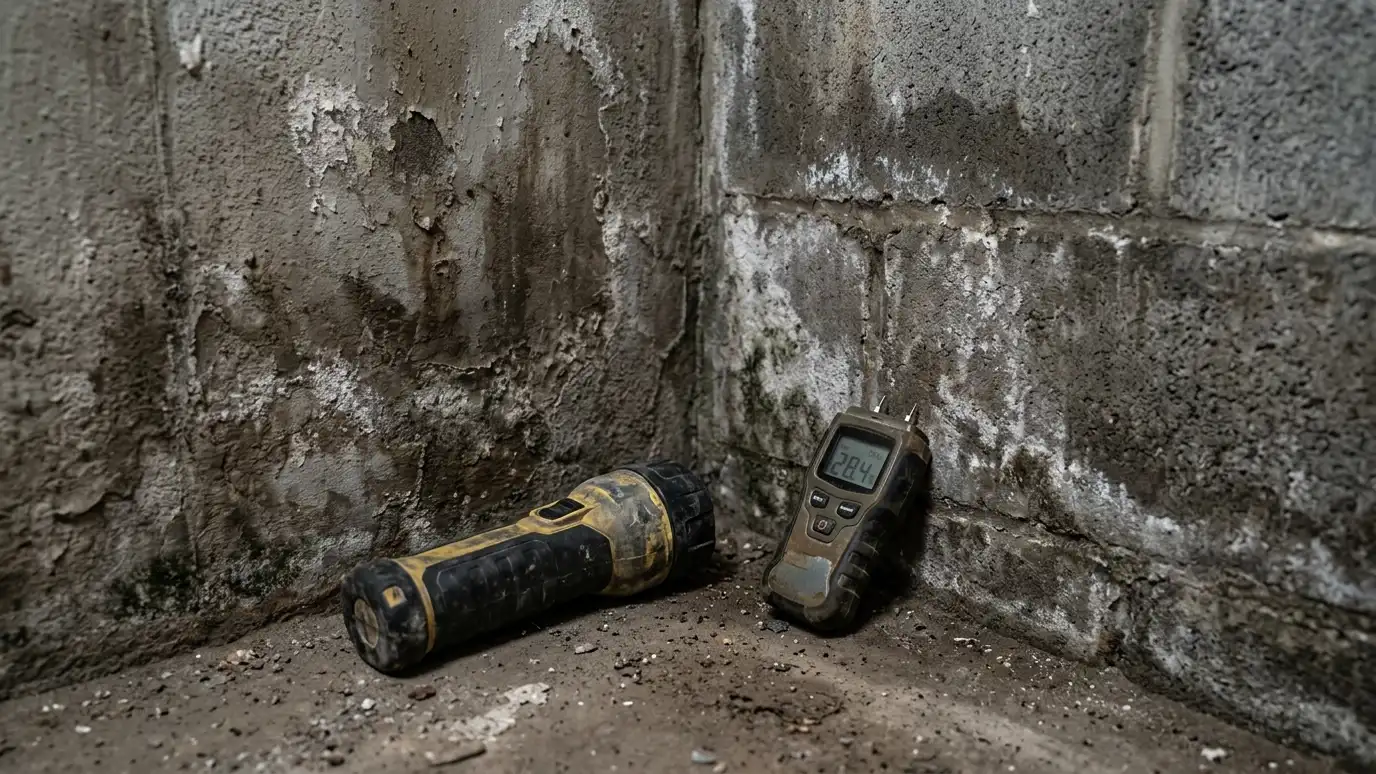
Watch how water moves across your yard in a rain. Note where it collects, where it runs and where it hits the foundation.
Roof water, slopes and neighbors all play a part.
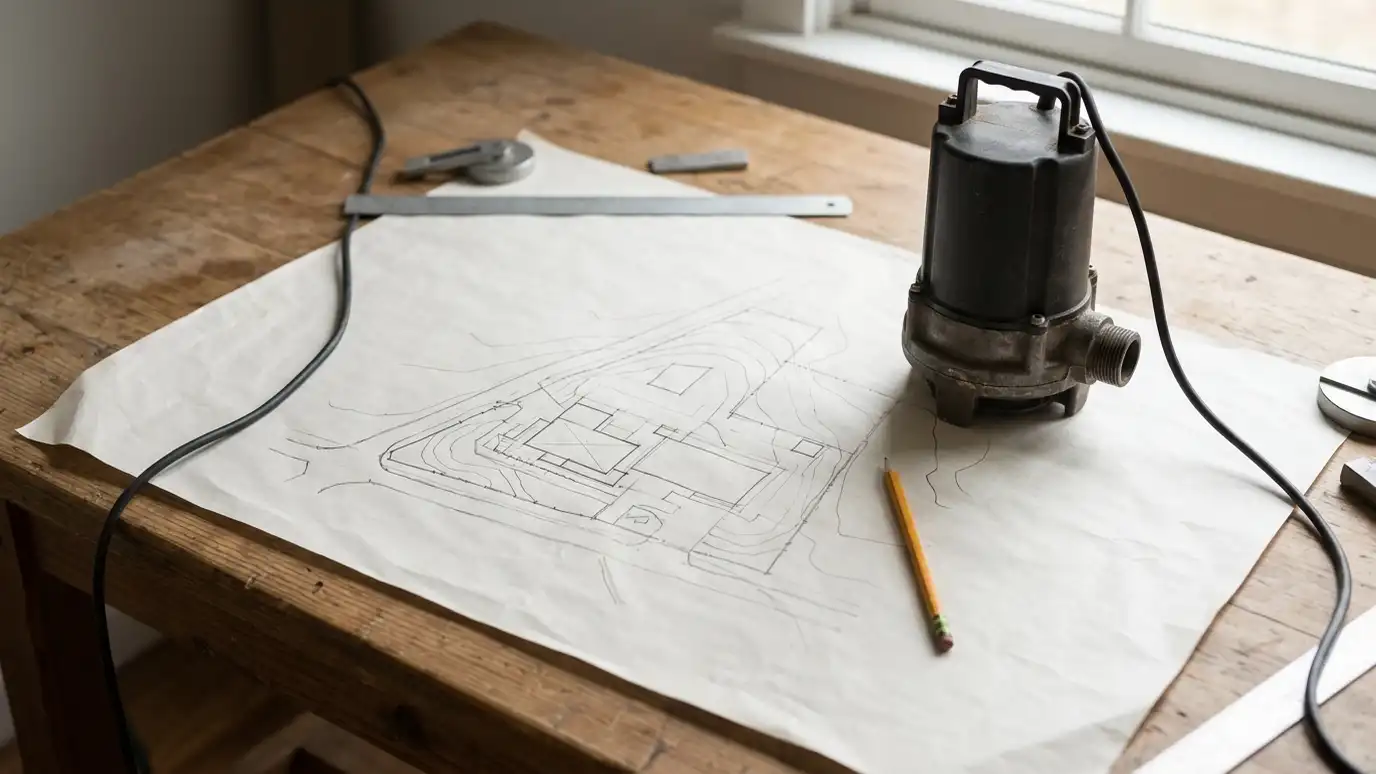
A simple sketch helps plan.
Roof water first
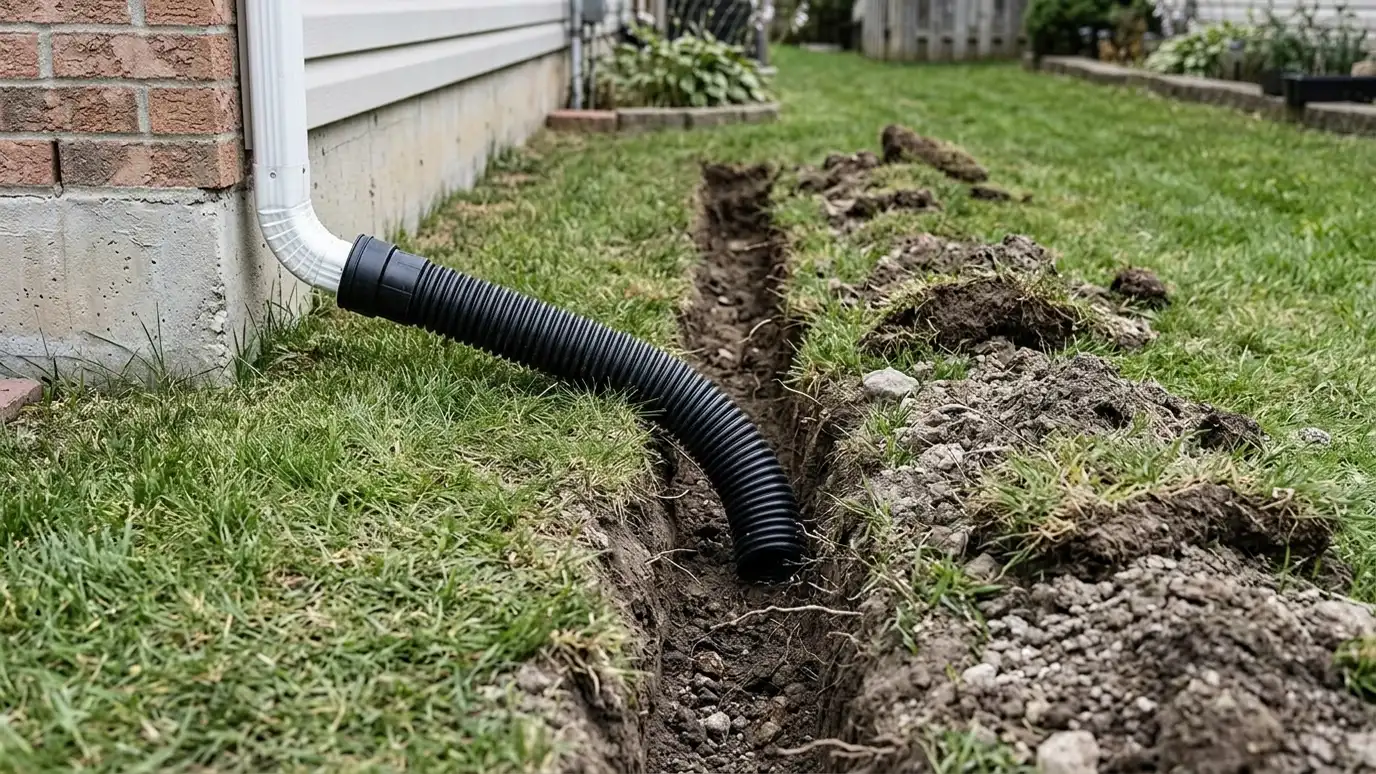
Gutters and downspouts handle the biggest load. Keep them clean, sloped and extended away from the wall.
Buried lines are tidier and more durable than loose hoses.
These steps cost little and help a lot.
Slope and soil
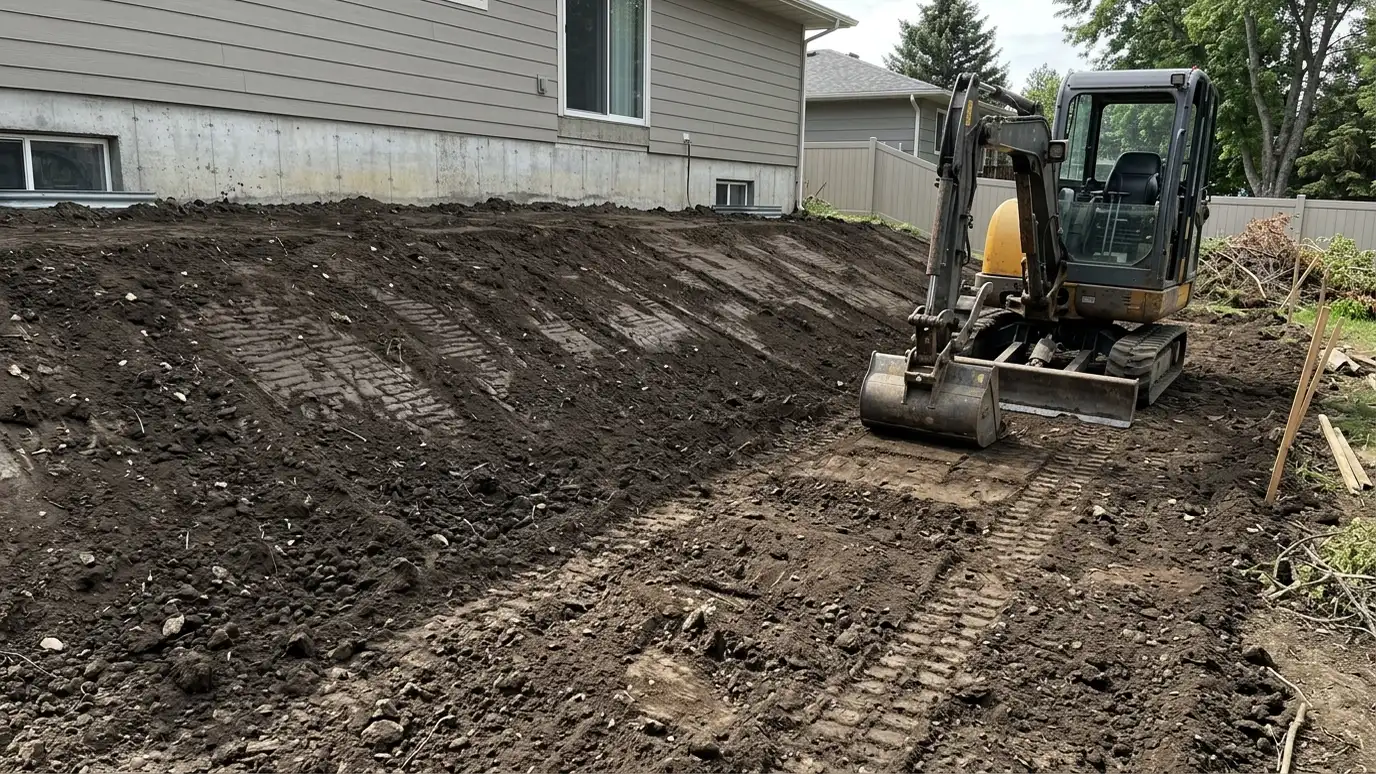
The ground should slope away from the house for several feet. Soil settles, so slopes need a check every few years.
Clay holds water, so surface drainage matters.
A level and a tape are enough to start.
Drains and swales
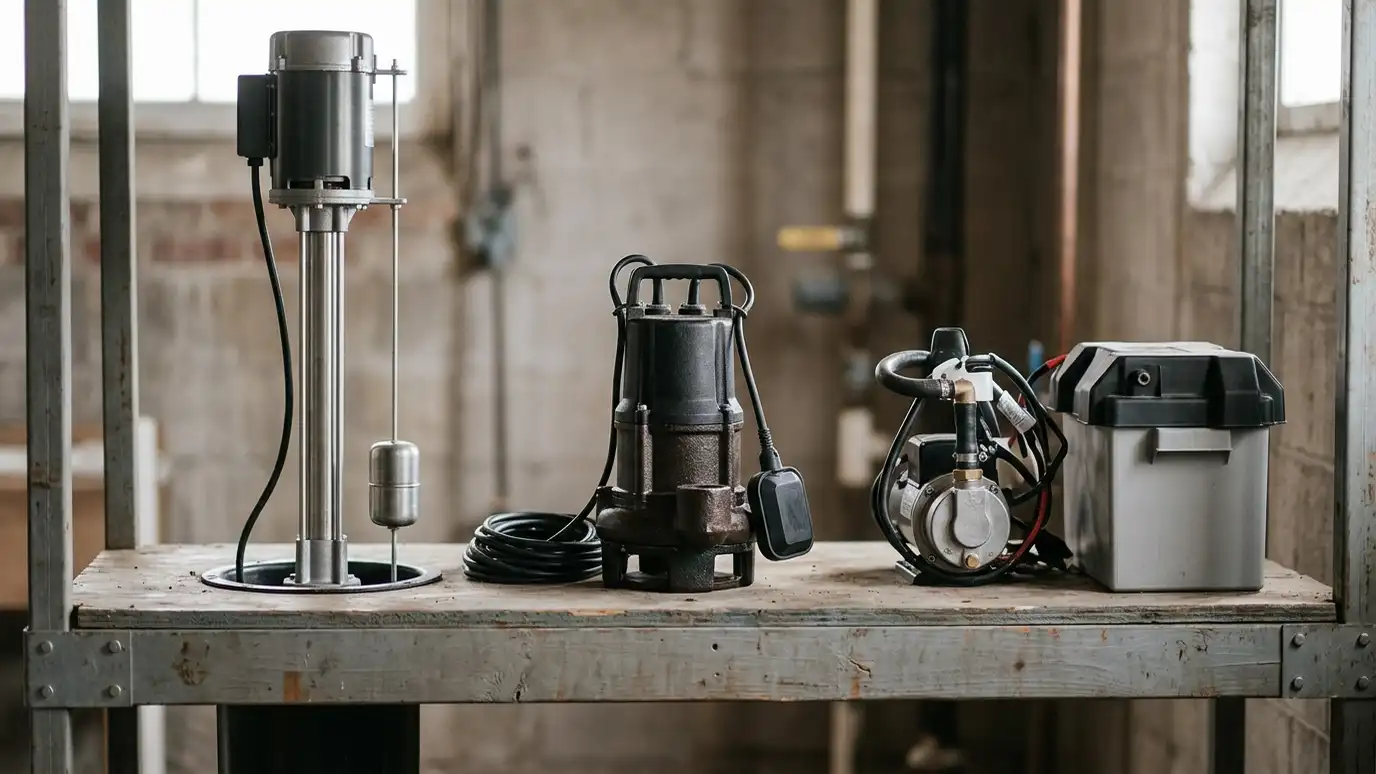
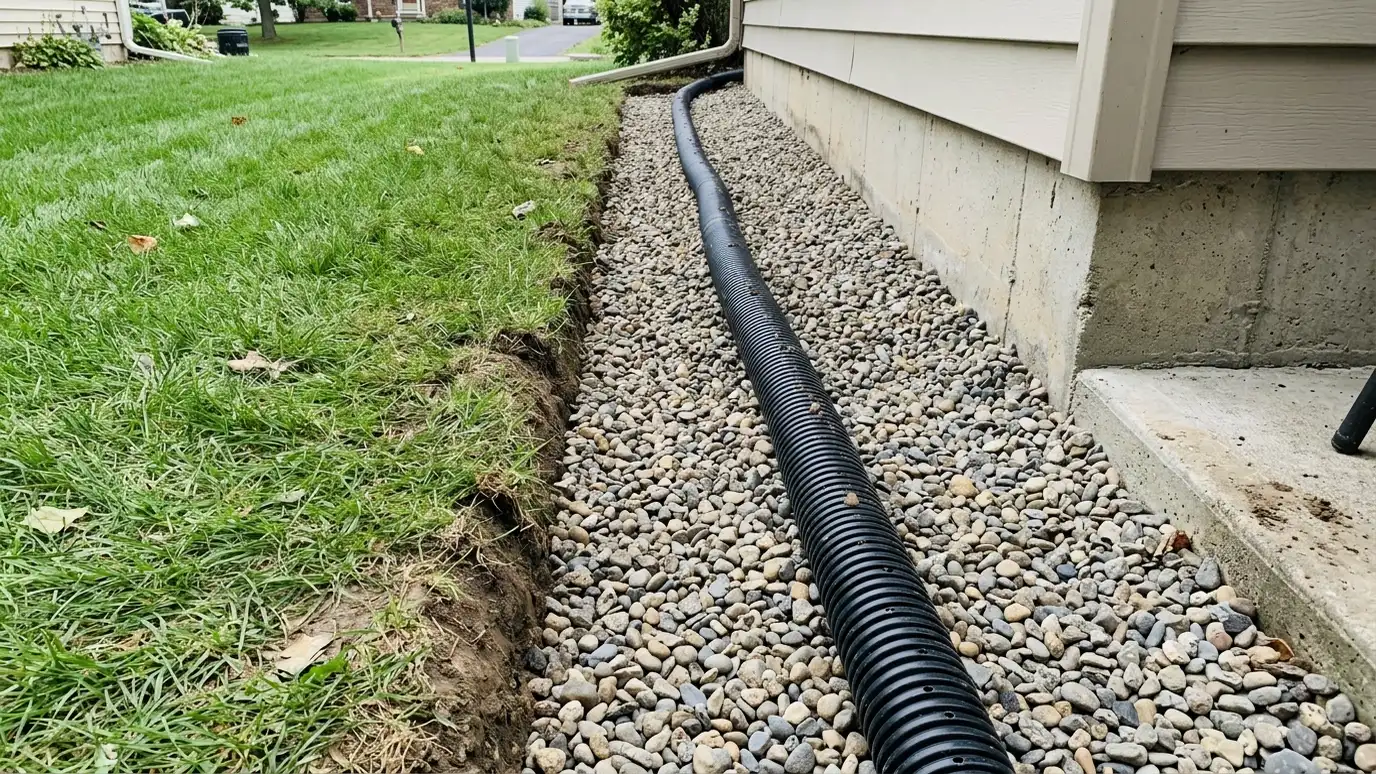
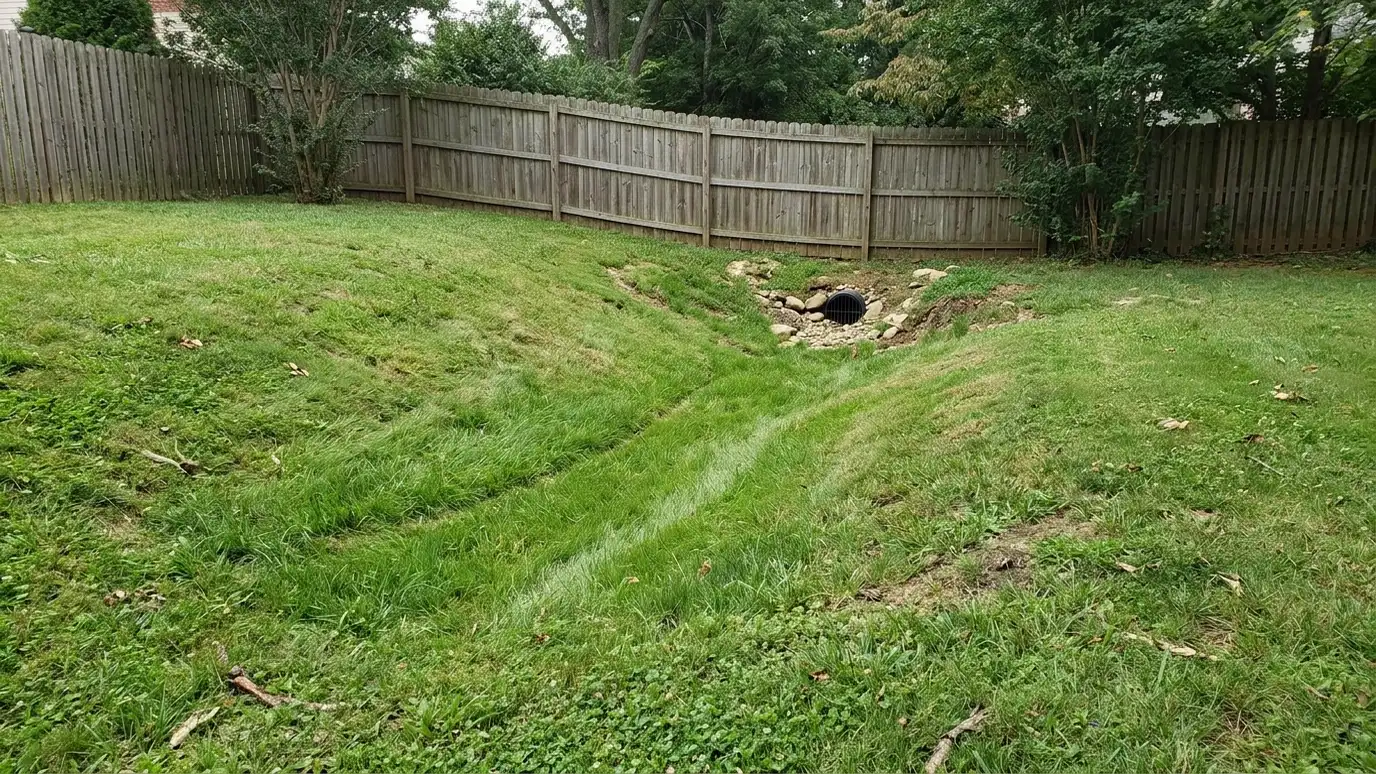
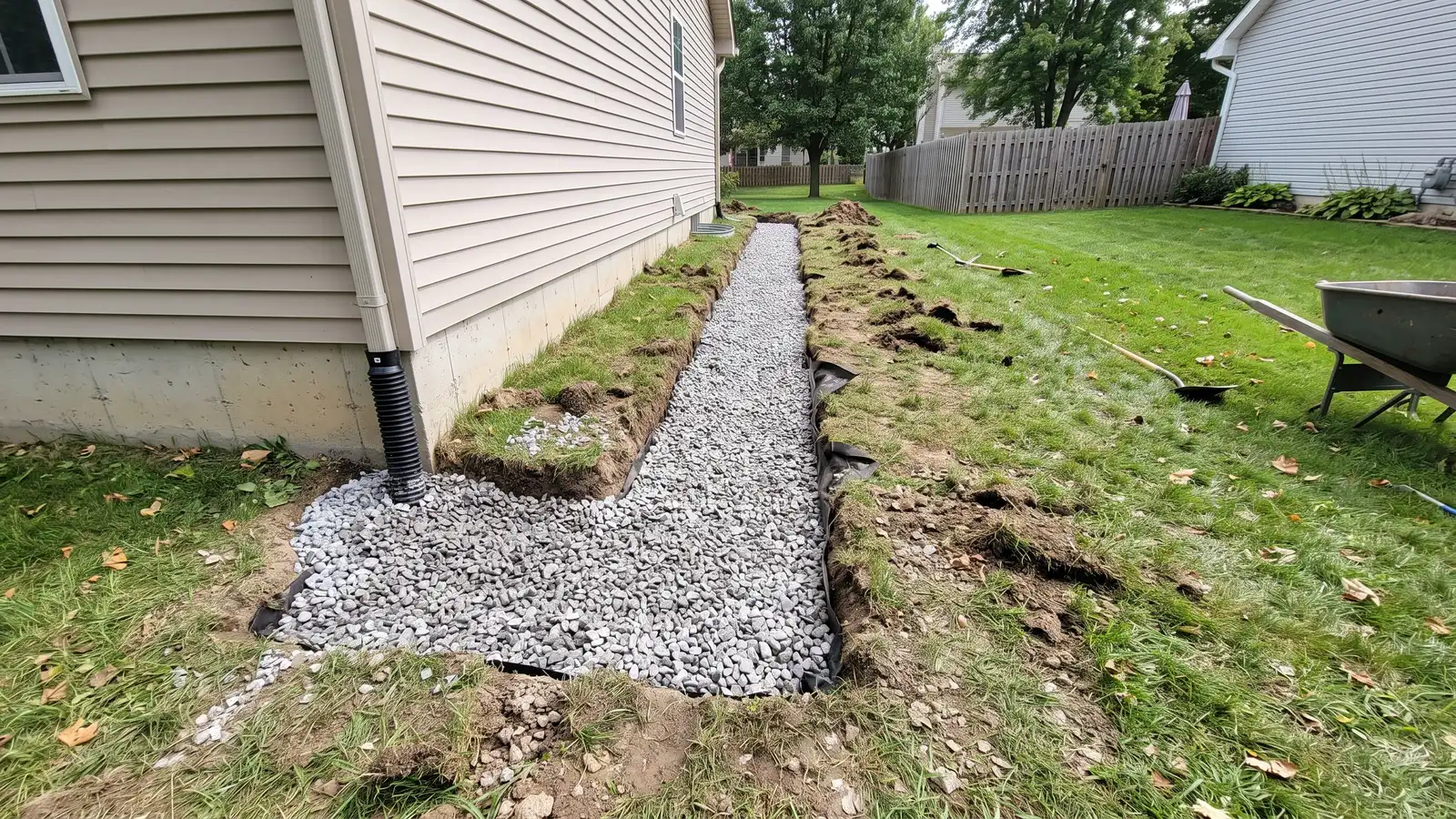
A swale moves surface water. A French drain collects water below the surface. A catch basin collects water at a low spot.
Each needs a slope and an outlet.
Choose based on where the water comes from.
Outlets and rules
Water needs somewhere to go, such as a slope, a basin or a dry well, within local rules. Call 811 before you dig.
Local offices can explain discharge rules.
We plan outlets with these points in mind.
Plants and maintenance
Plants and mulch help soil absorb water. Check basins, emitters and gutters a few times a year.
Remove debris and keep grates clear.
A little care keeps a drainage system working.
Move roof water far from the house, slope the ground away and give every drain a safe outlet.