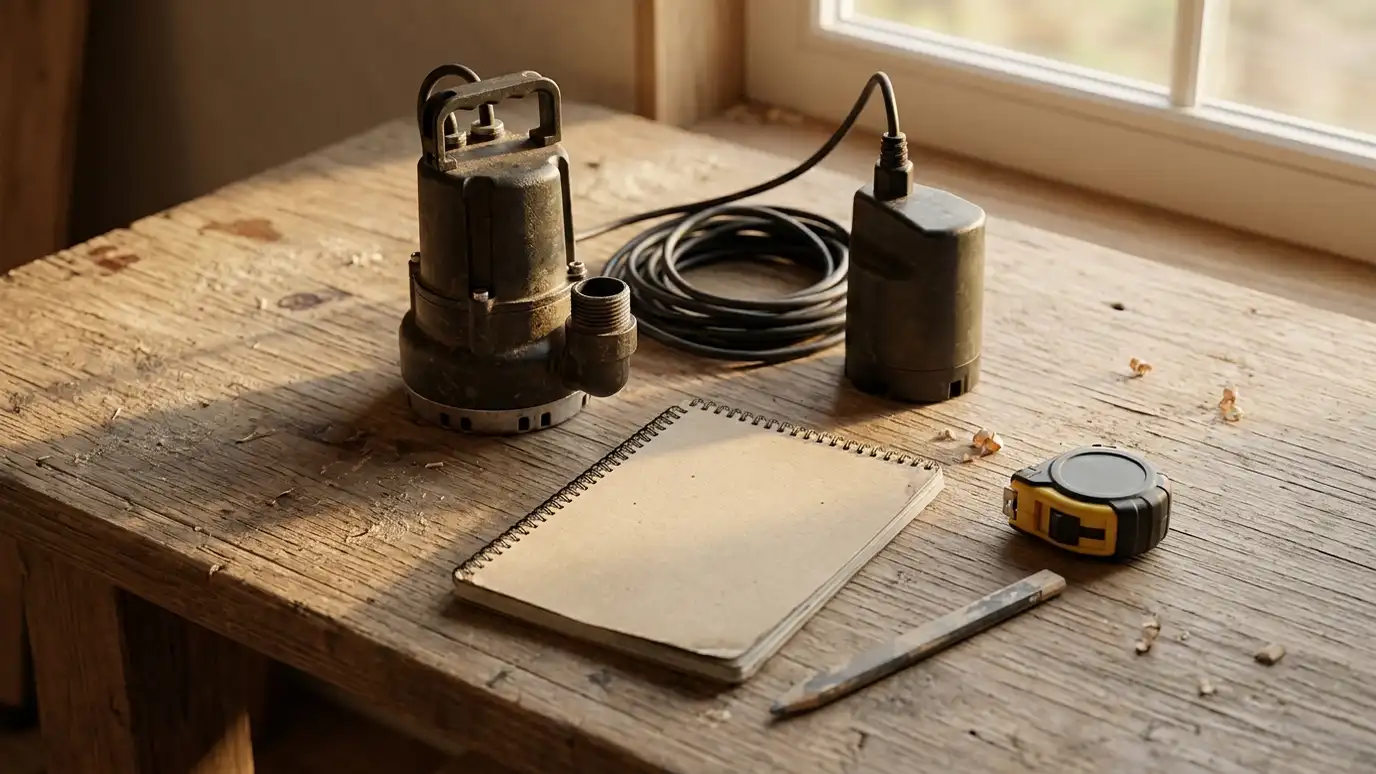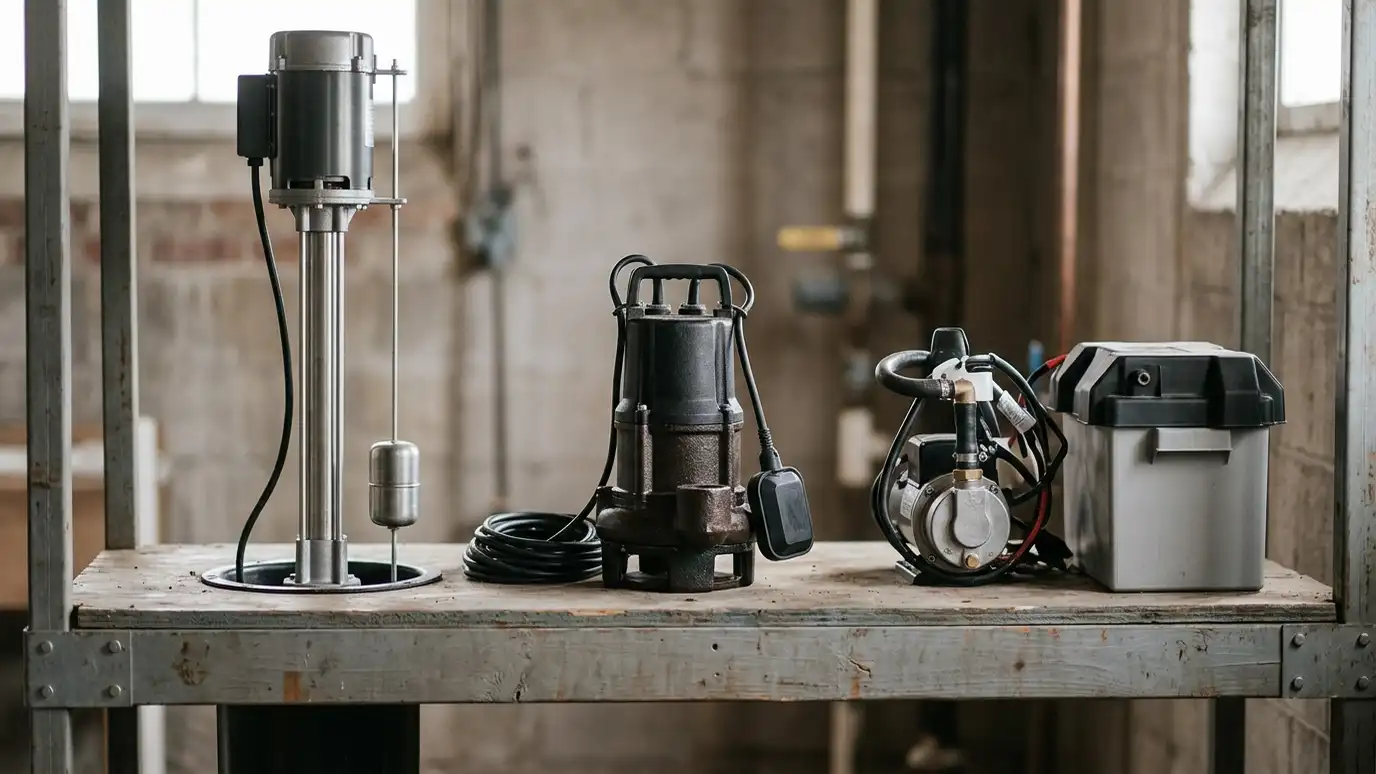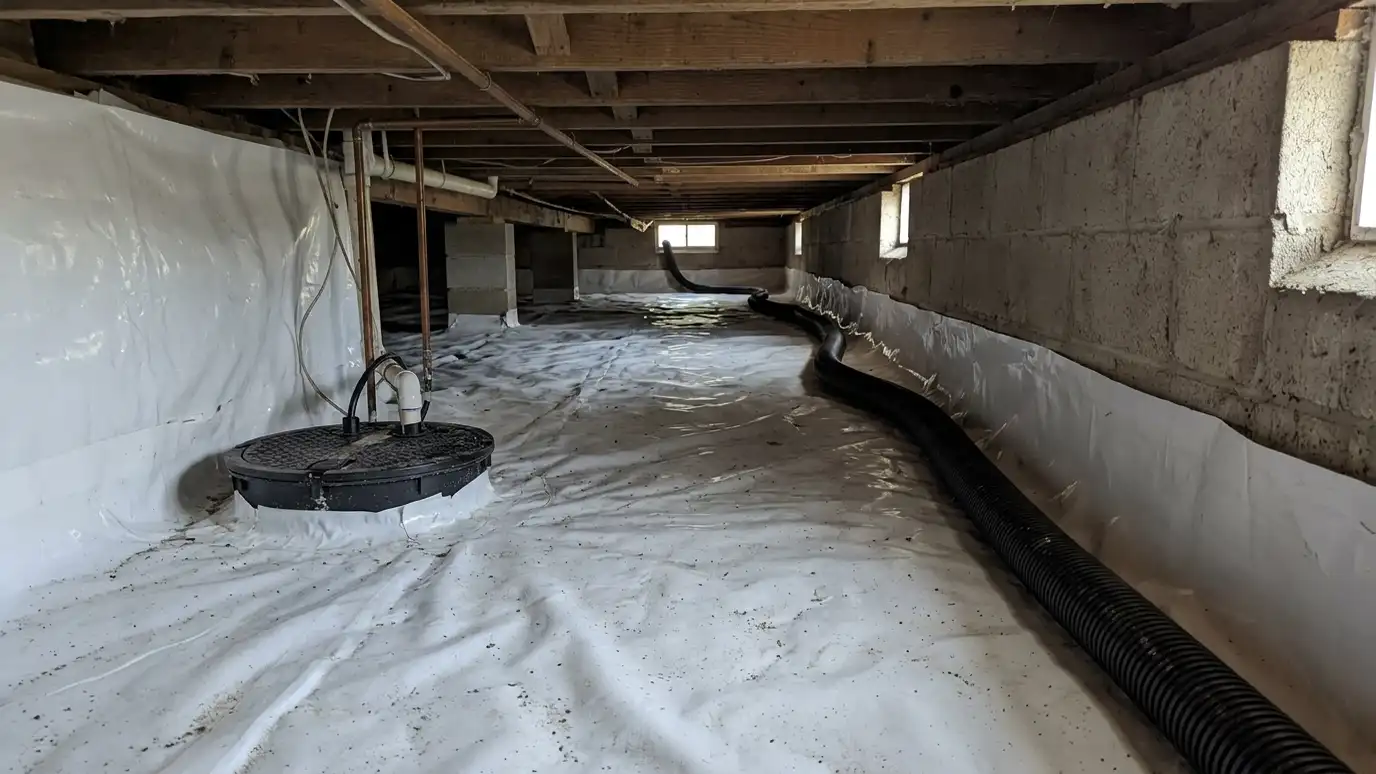
Crawl space drainage and sump pumps that collect standing water and seepage in a sealed pit and send it out through a discharge line away from the house.
Water in a crawl space is more than a nuisance. It softens soil under footings, soaks insulation and wood and gives mold a place to live. Standing water can come from a high water table, a downspout, a low outdoor grade or a leaking pipe. In parts of Nashville with heavy clay and slow drainage, a small sump pit and drain pipe often solve what a liner alone cannot, because water needs a way out as well as a way to be kept out.
We look for the source of the water first, checking gutters, grading, pipes and the foundation walls. When groundwater is the cause, we lay a perforated drain pipe in stone along the low edge of the crawl space, connect it to a sealed sump pit and add a pump with a discharge line that carries water outside and away. We tie the vapor barrier into the system so the liner and the drain work together. We also add a lid, a check valve and, if you wish, an alarm, and we show you how to test the pump a few times a year.
A perforated pipe in stone collects water and carries it to a pit.
A lidded pit keeps humid air in the crawl space.
The pump sends water outside and away from the foundation and the neighbors.
The vapor barrier ties into the drain so water flows toward the pit.
We trace the water to gutters, grading, pipes or groundwater.
A perforated pipe in stone collects water along the low side.
A lidded pit holds the pump and keeps humid air in the crawl space.
The pump lifts water out, and the valve stops backflow.
The vapor barrier connects to the drain so water flows to the pit.
An alarm warns you if the water rises.
Every topic has its own page with what to expect and how we approach it.
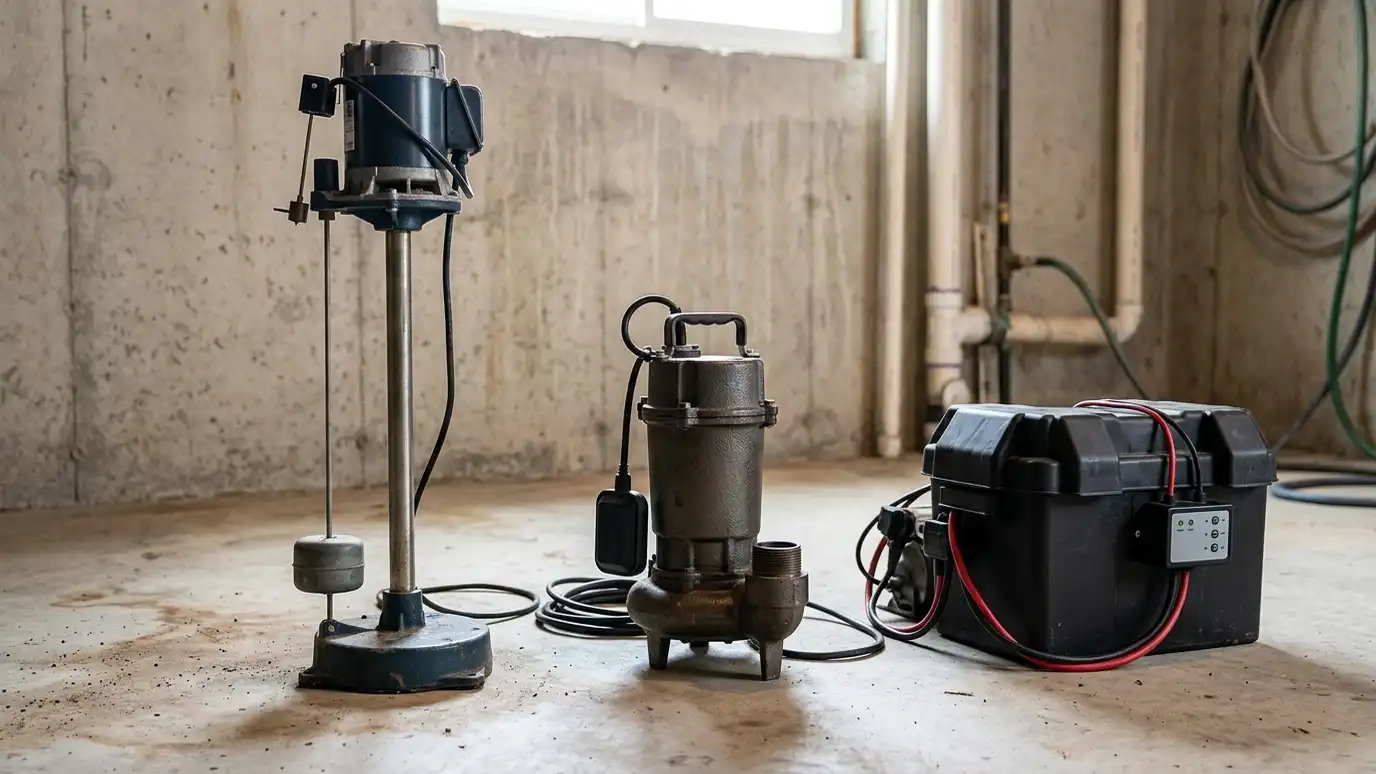 Comparison guideSump Pump TypesHow submersible, pedestal, battery backup and water-powered pumps differ in noise, life, cost to run and what happens…Learn more
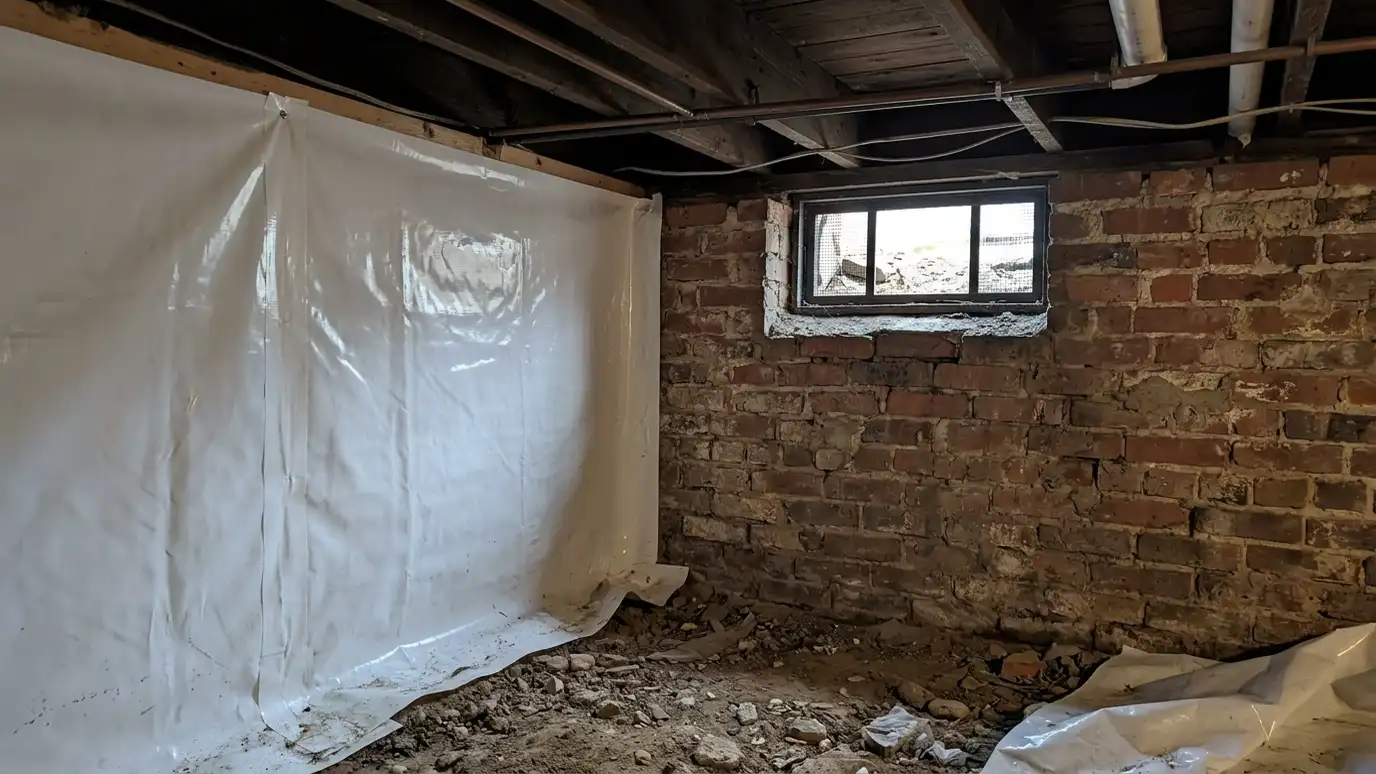 Comparison guideEncapsulation vs VentsHow a sealed, controlled crawl space differs from a vented one in moisture, air movement, insulation and upkeep.Learn more
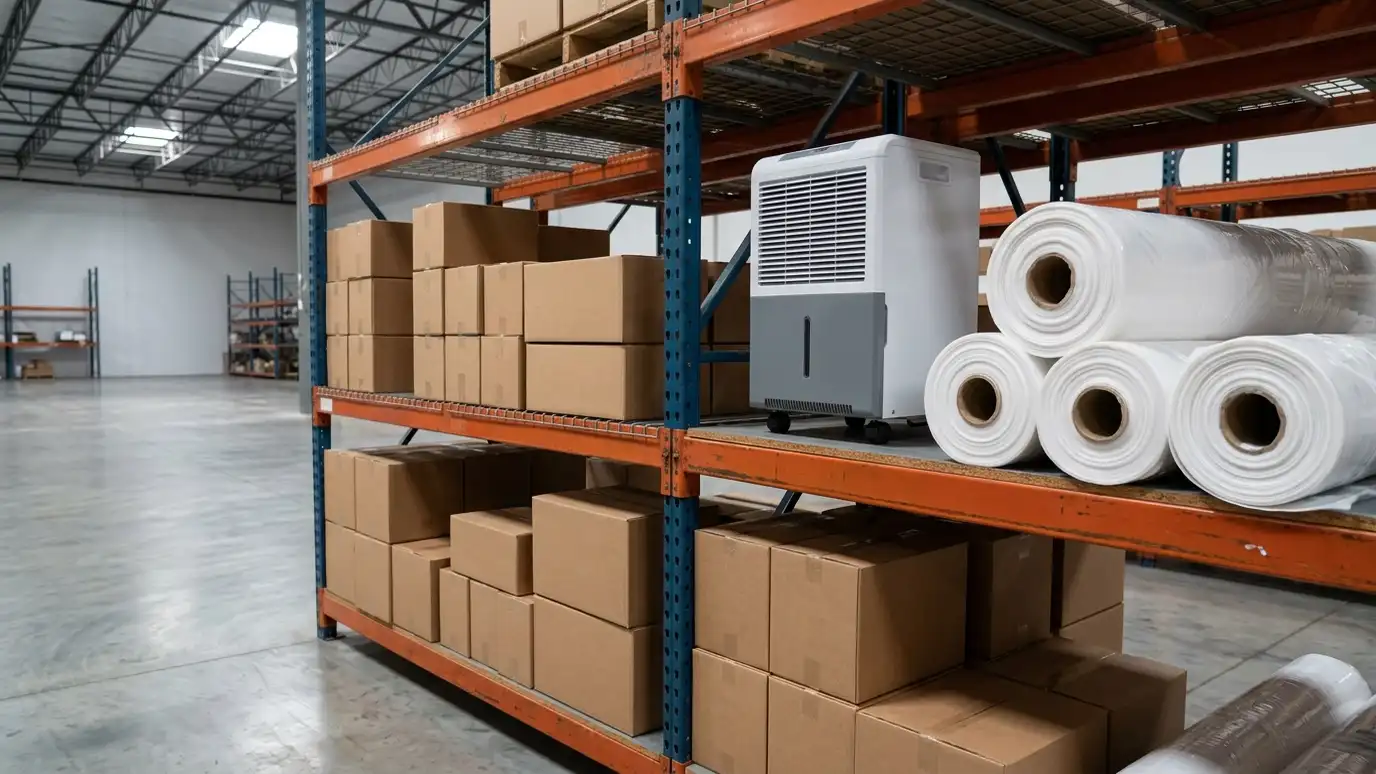 ResourceWayneA maker of sump pumps, battery backup systems, utility pumps and water pumps for homes.Learn more
Pick the area of concern, such as walls, floor, crawl space, yard or pump, to get likely causes, what to try first and the service page that fits.
You tell us what you have seen, where and when, and we set a visit that fits your day.
We walk the outside and inside with a moisture meter, take photos, measure slopes and call for utility marking.
You review the cause, the options and a plain written scope with every line and the schedule before anything is ordered.
We handle permits, protect your property and prepare the work area, from the floor edge to the trench.
We install drains, pumps, liners or repairs, restore floors and lawns and test every system with water.
We walk the job with you, share a care guide and schedule a first checkup.
Groundwater, downspouts, low grade and leaks are common causes. We find which applies.
If the water cannot drain by gravity to daylight, a pump is often needed.
A liner does not stop standing water. Drainage has to come first.
Away from the house, onto a slope or into a buried line, following local rules.
A few times a year, and before heavy rain. We show you how.
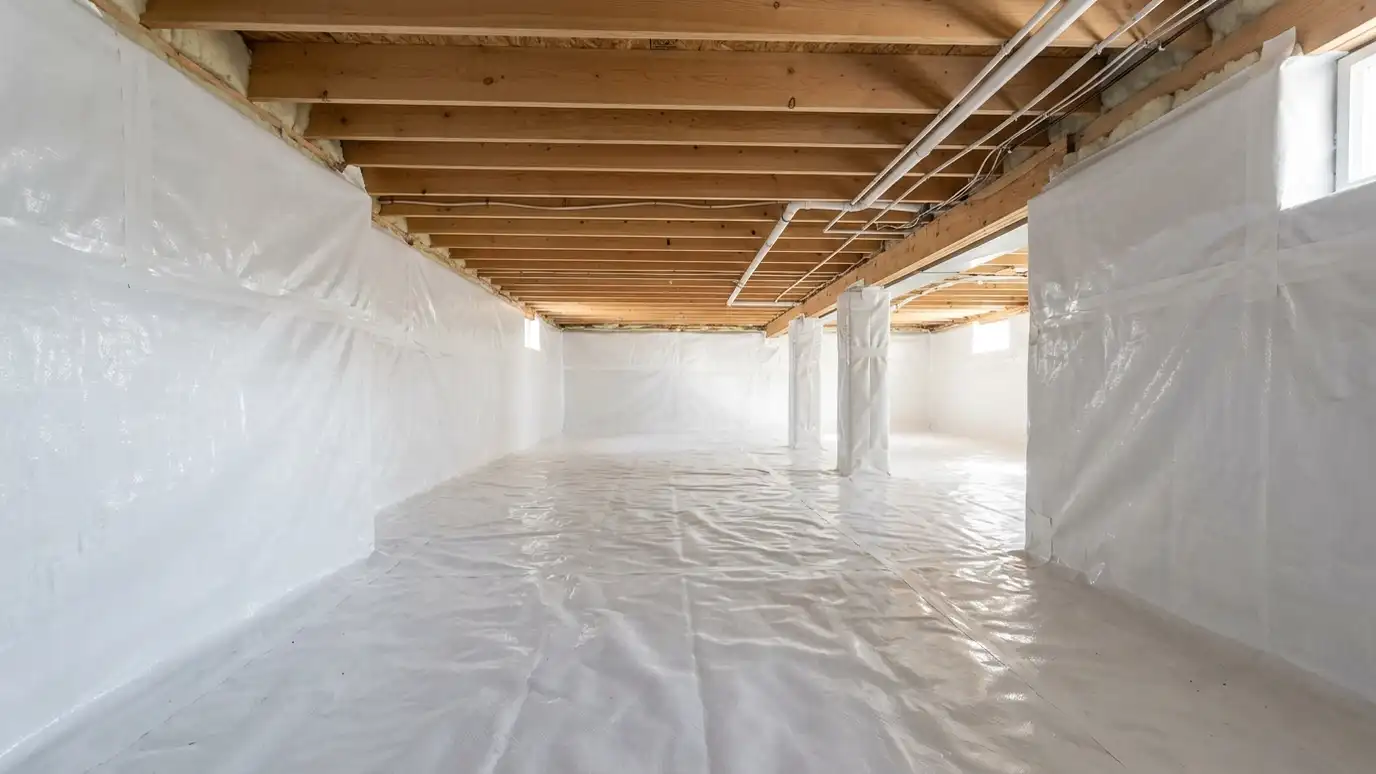 Crawl Space EncapsulationCrawl space encapsulation that seals the floor, walls and vents with a heavy liner and controls humidity, so…Explore
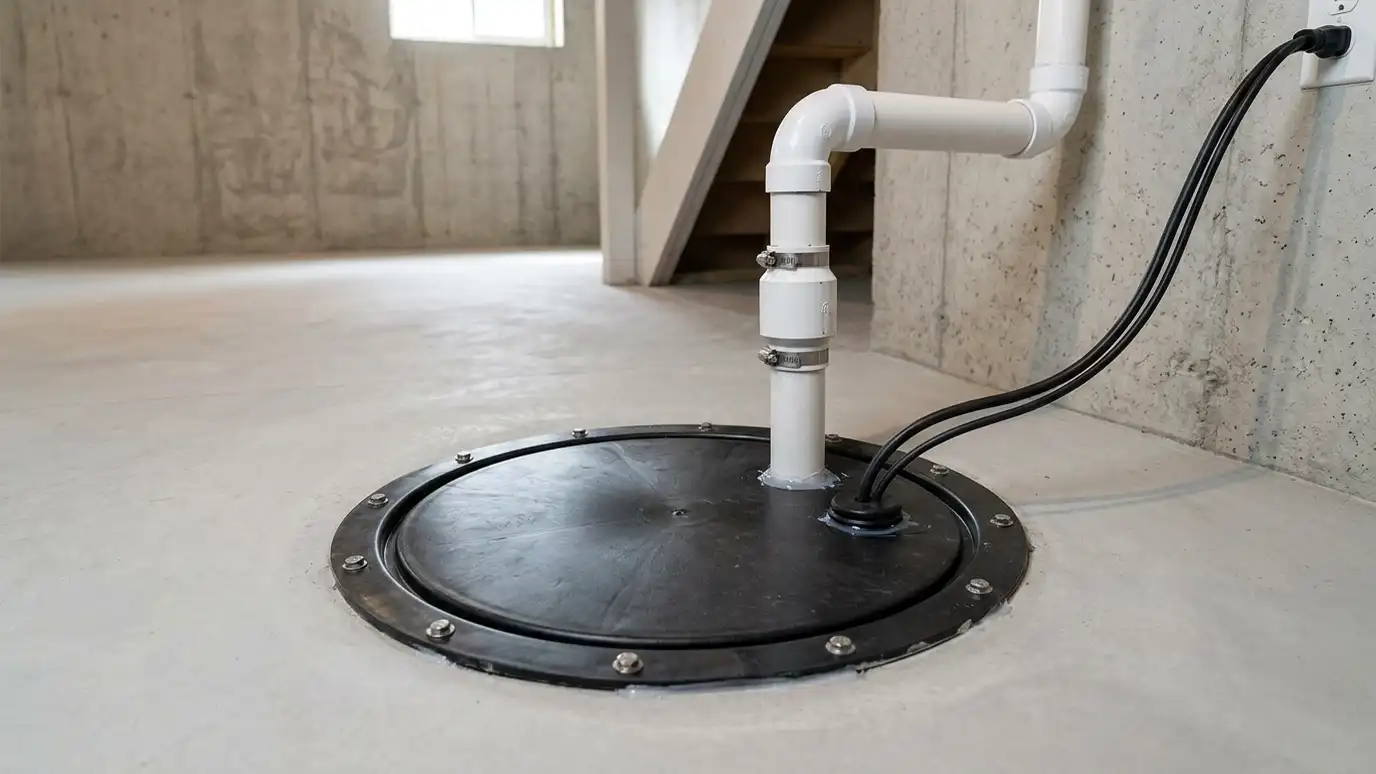 Sump Pump InstallationSump pump installation with a properly sized pit, a quality pump, a check valve, a sealed lid and…Explore
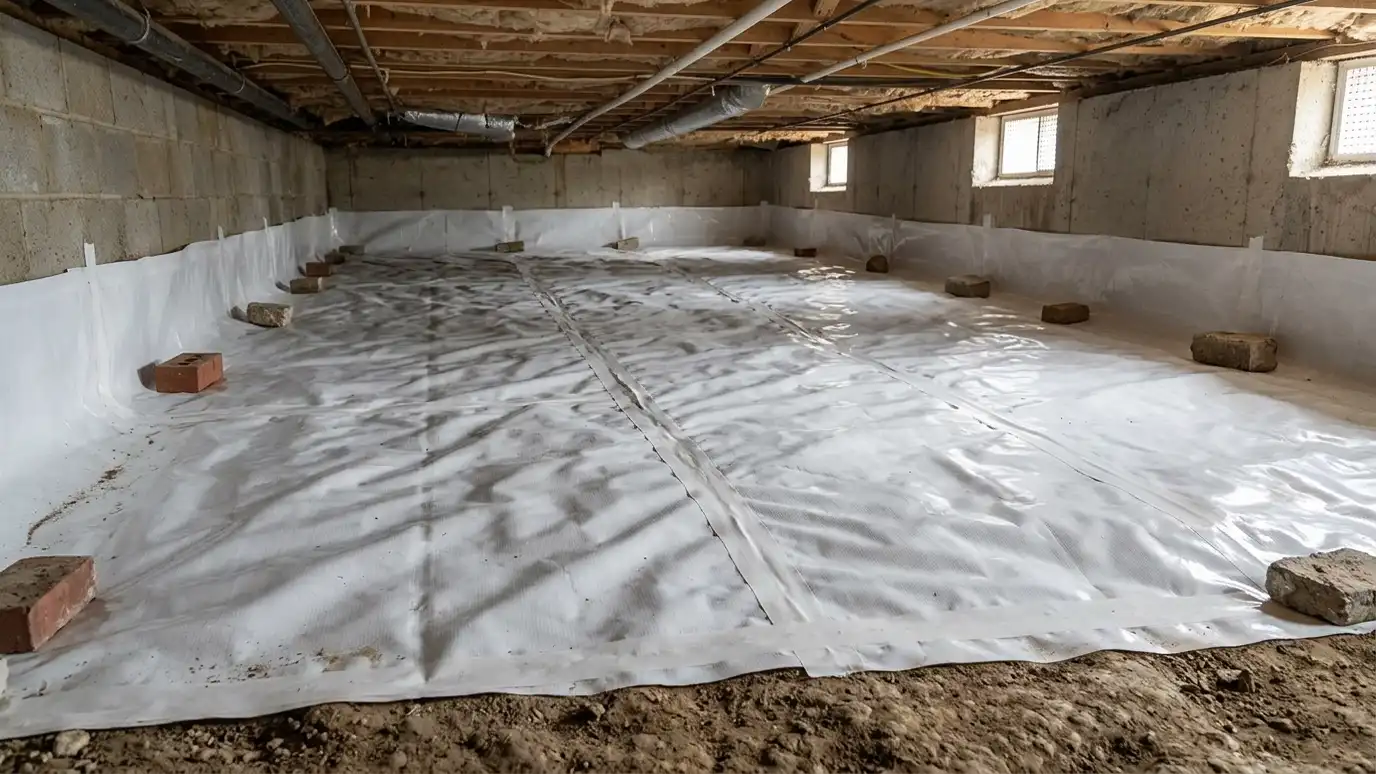 Crawl Space Vapor Barrier InstallationCrawl space vapor barrier installation with heavy poly sheeting that covers the dirt floor, overlaps and tapes at…Explore
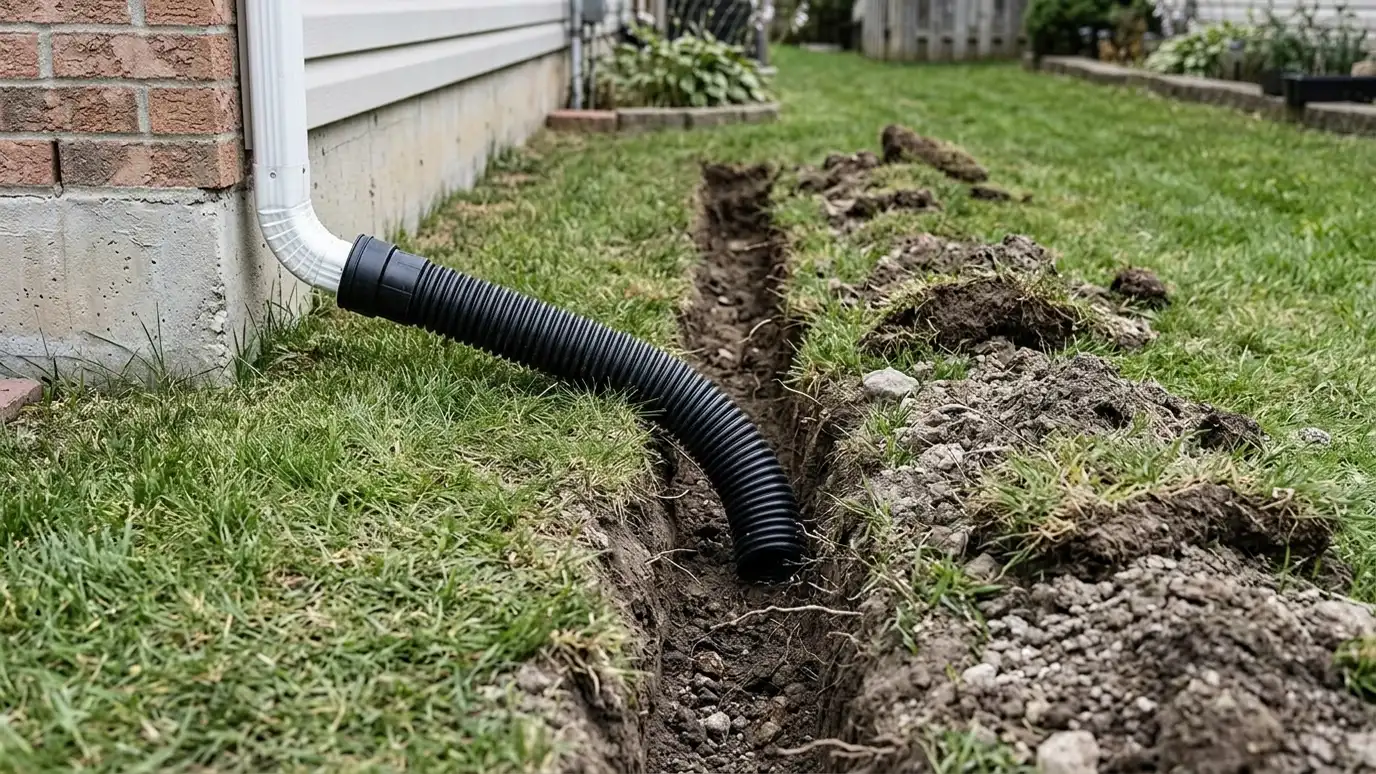 Downspout Extensions and Underground Drain LinesDownspout extensions and underground drain lines that carry roof water far from the foundation, to the street, a…Explore
Tell us about your property and we will call you back to set up a visit.
Or call (615) 357-7797 to talk now.