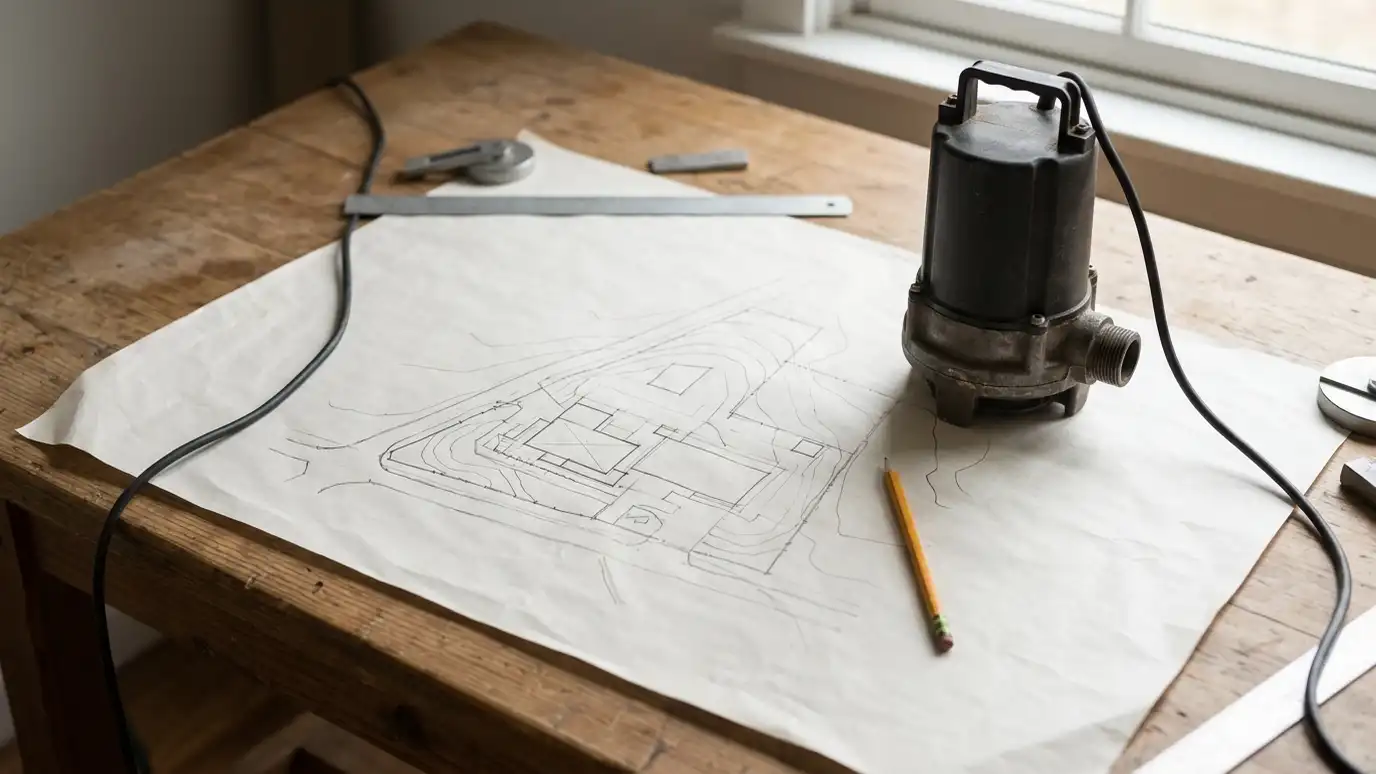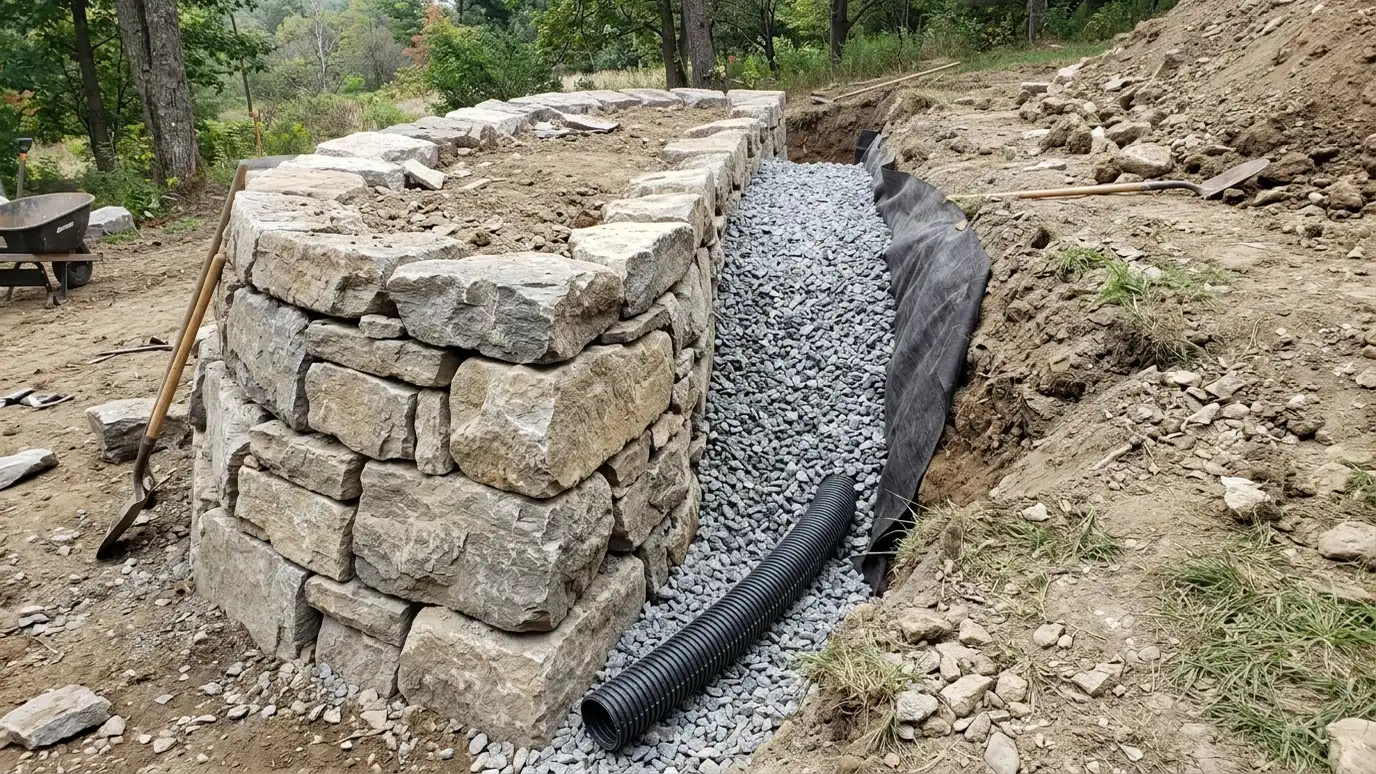
Retaining wall drainage with gravel backfill, filter fabric, weep pipes and outlets that relieve water pressure behind walls so they stay straight and strong.
Water is the enemy of a retaining wall. Soil behind a wall that fills with water gets heavy and pushes hard, which is why many walls lean, bulge or crack. A wall with a drainage layer, a pipe and an outlet lets water escape instead of building pressure. Hillside lots around Nashville depend on retaining walls, and adding or restoring drainage can be the difference between a wall that settles in and one that fails.
We examine the wall for leaning, bulges, cracks, staining and missing or blocked weep holes. For repairs, we dig behind the wall where access allows, add clean gravel and filter fabric, install a perforated pipe at the base and route it to a daylight outlet. For new walls, we plan the drainage layer, pipe and outlet with the builder. We also look at what feeds water to the wall, such as roof runoff, a patio or a slope above, and we fix those sources. Large or leaning walls call for an engineer, and we explain when that is the case.
Soil full of water pushes much harder than dry soil.
Clean gravel and fabric let water move to a pipe instead of building up.
Water must be able to exit, and the openings must stay clear.
Roof, patio and slope water above the wall are traced and handled.
We look for lean, bulges, cracks and blocked weep holes.
A clean drainage layer stops soil from building pressure.
A perforated pipe carries water to an outlet.
Water exits where it can drain freely.
Roof, patio and slope water are traced.
Large or leaning walls get a structural review.
Every topic has its own page with what to expect and how we approach it.
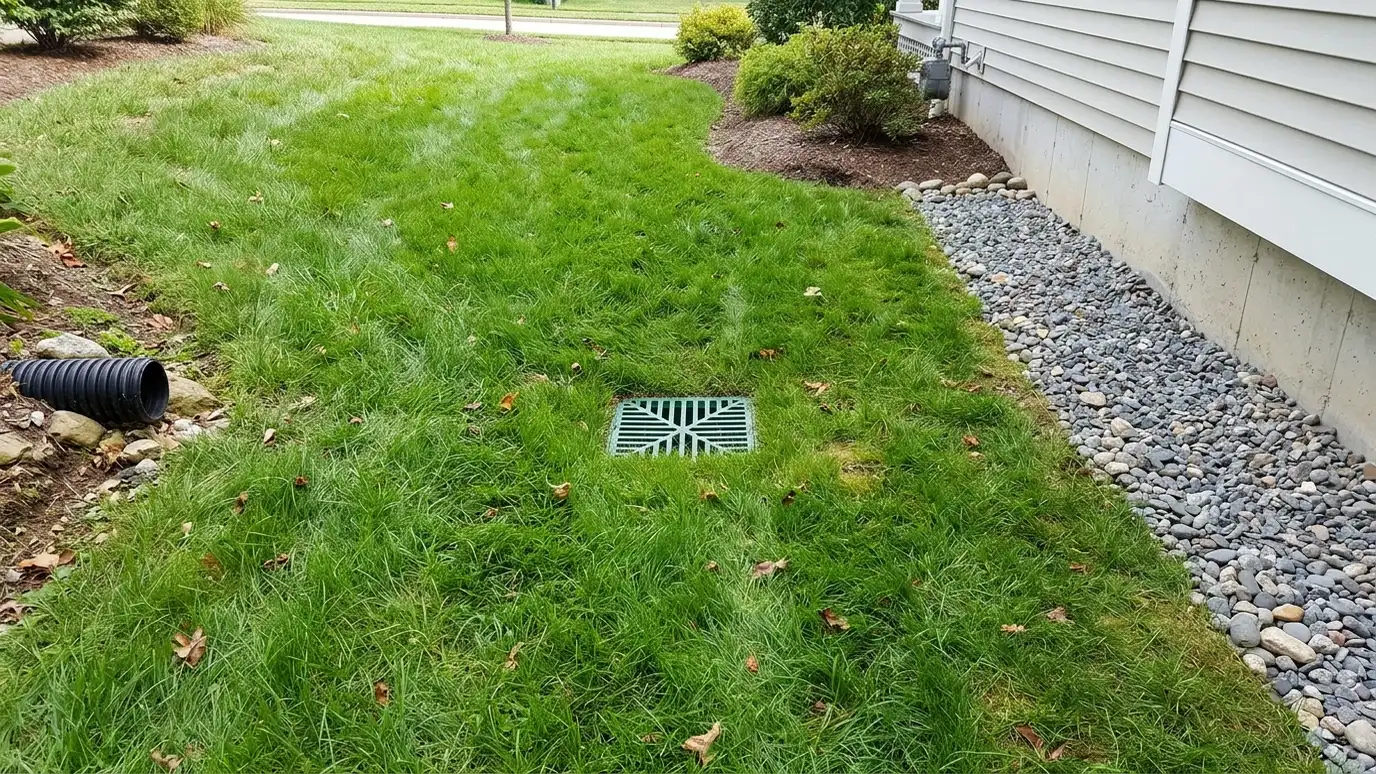 Comparison guideFrench Drain TypesHow interior, exterior footing, curtain and surface drains differ in where they collect water and where it goes.Learn more
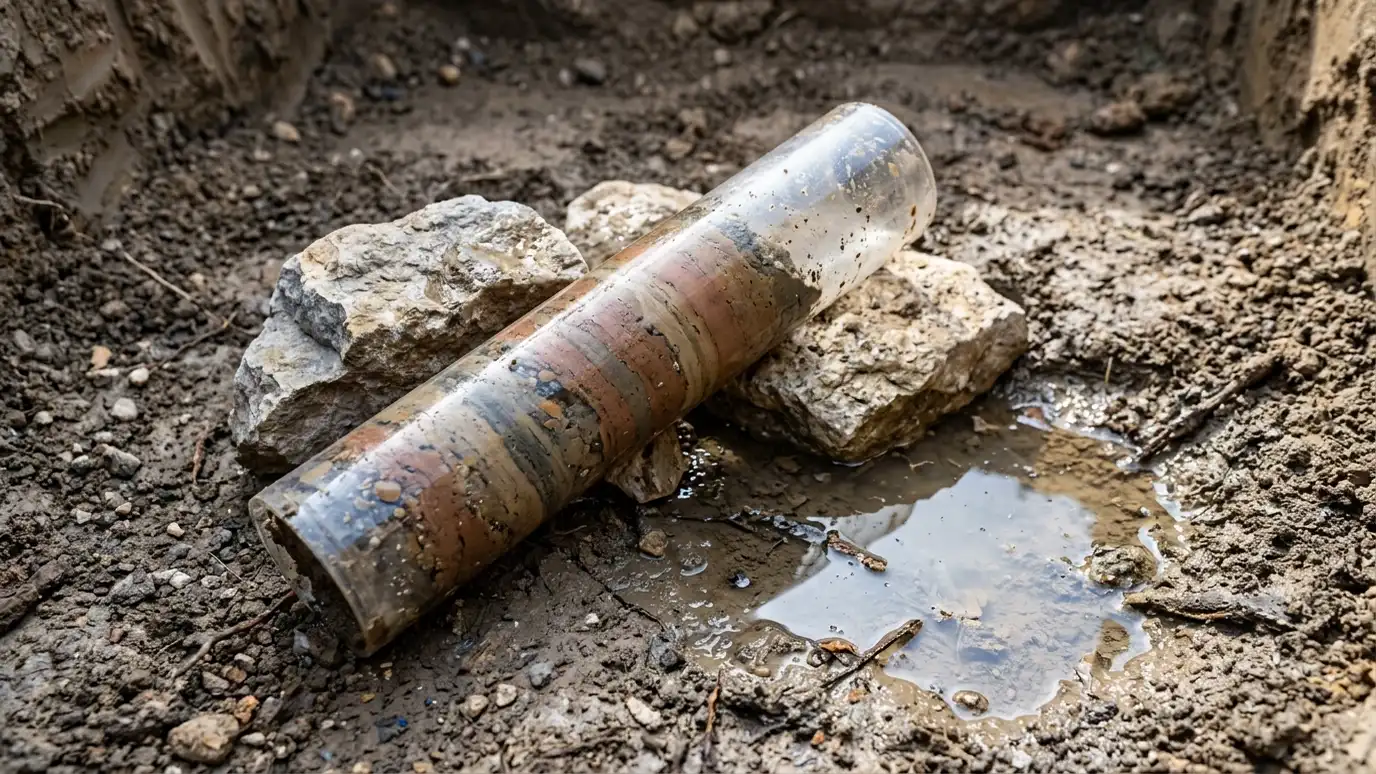 Comparison guideWater Pressure and Water TableHow groundwater builds pressure against walls and floors, and why drainage is the key to relieving it.Learn more
 ResourceNDSA maker of catch basins, channel drains, grates, pipe fittings and other yard drainage products, now part of…Learn more
Pick a drain, pump, repair, crawl space or drainage project, set the size and add allowances to see a ballpark planning range. Placeholder values only.
You tell us what you have seen, where and when, and we set a visit that fits your day.
We walk the outside and inside with a moisture meter, take photos, measure slopes and call for utility marking.
You review the cause, the options and a plain written scope with every line and the schedule before anything is ordered.
We handle permits, protect your property and prepare the work area, from the floor edge to the trench.
We install drains, pumps, liners or repairs, restore floors and lawns and test every system with water.
We walk the job with you, share a care guide and schedule a first checkup.
Water pressure behind them is a common cause, along with poor base and height.
Often yes, by digging behind the wall or adding drains at the base.
Small openings that let water pass through a wall. They must stay clear.
Sometimes, with drainage and stabilization. Large lean needs an engineer.
No. Both matter.
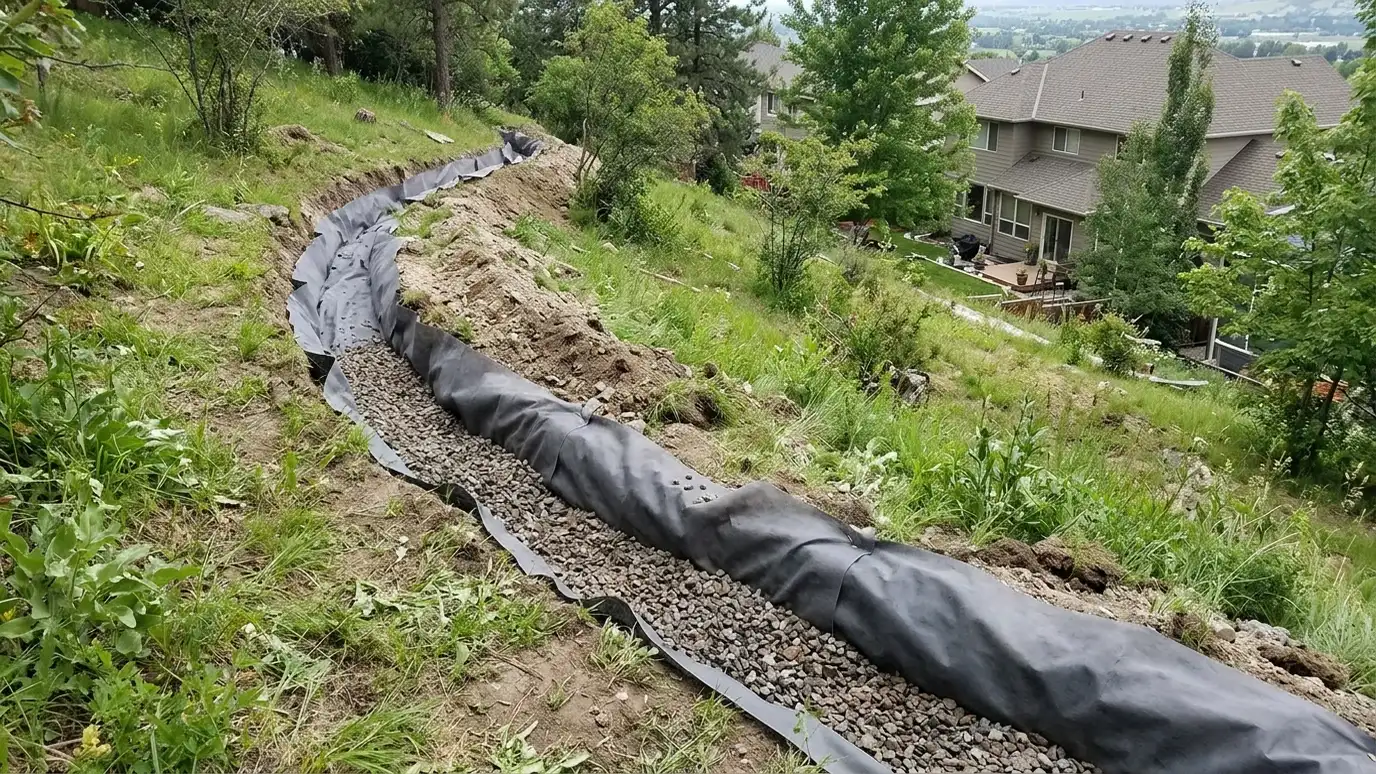 Curtain DrainsCurtain drains that intercept water on a slope before it reaches your house, using a curved trench of…Explore
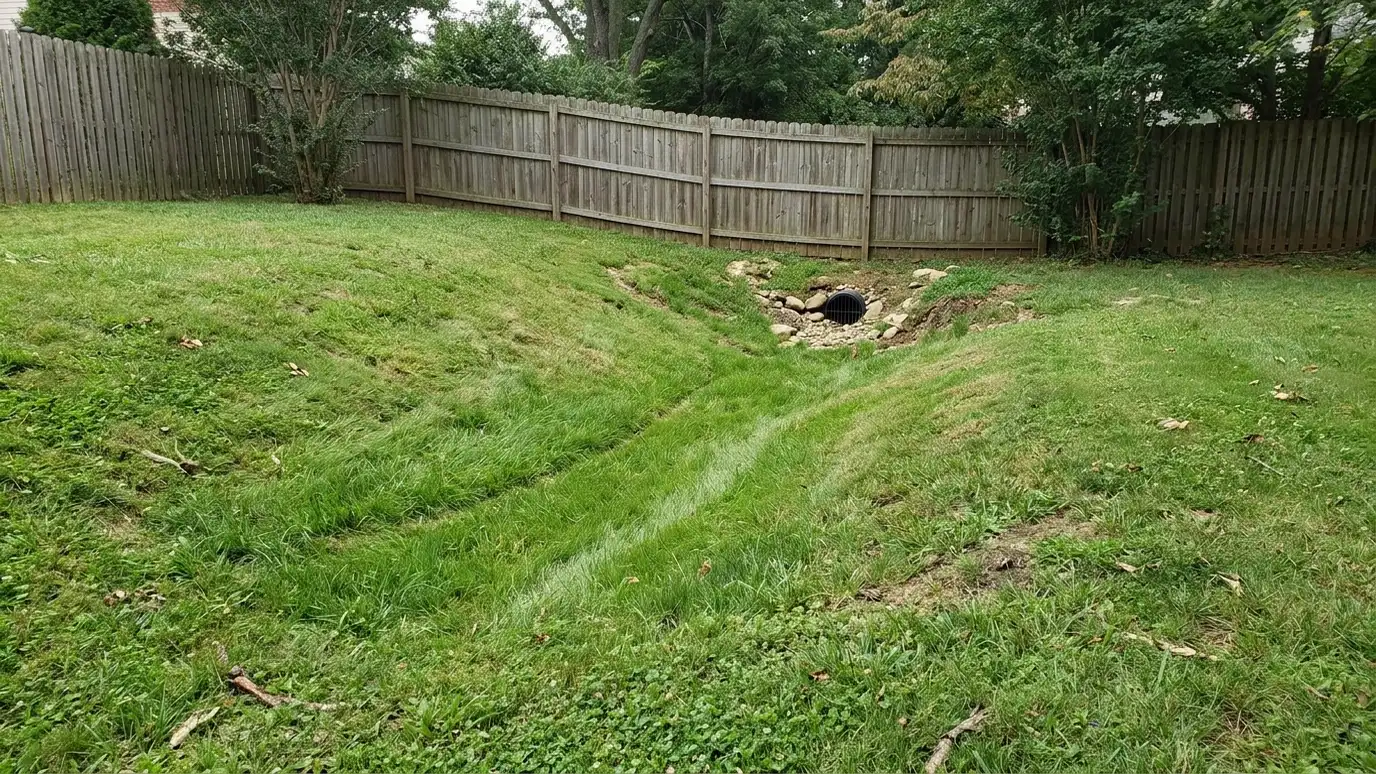 Yard Drainage SolutionsYard drainage solutions that combine grading, drains, swales and outlets into one plan for lawns and gardens that…Explore
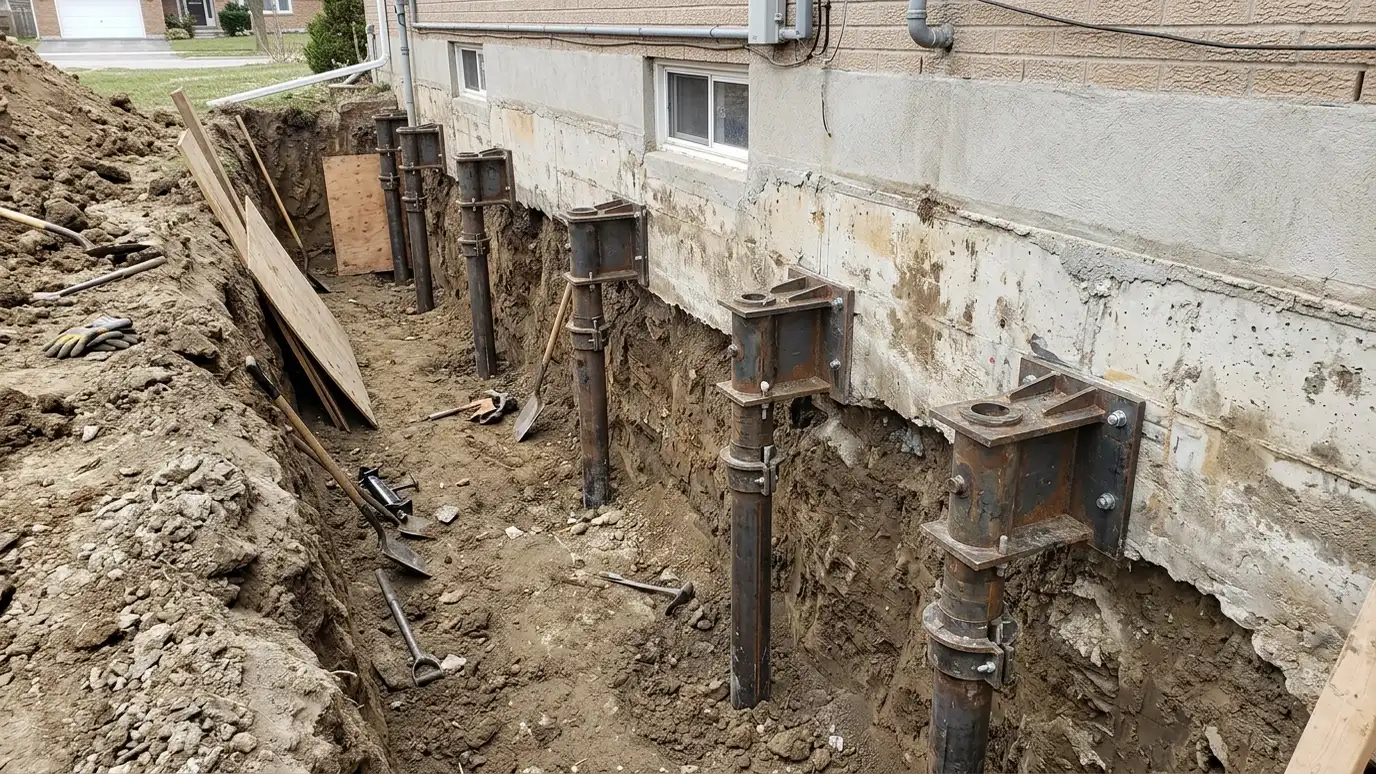 Foundation Piers and UnderpinningFoundation piers and underpinning that transfer a settling house onto deeper, more stable soil or rock, with engineered…Explore
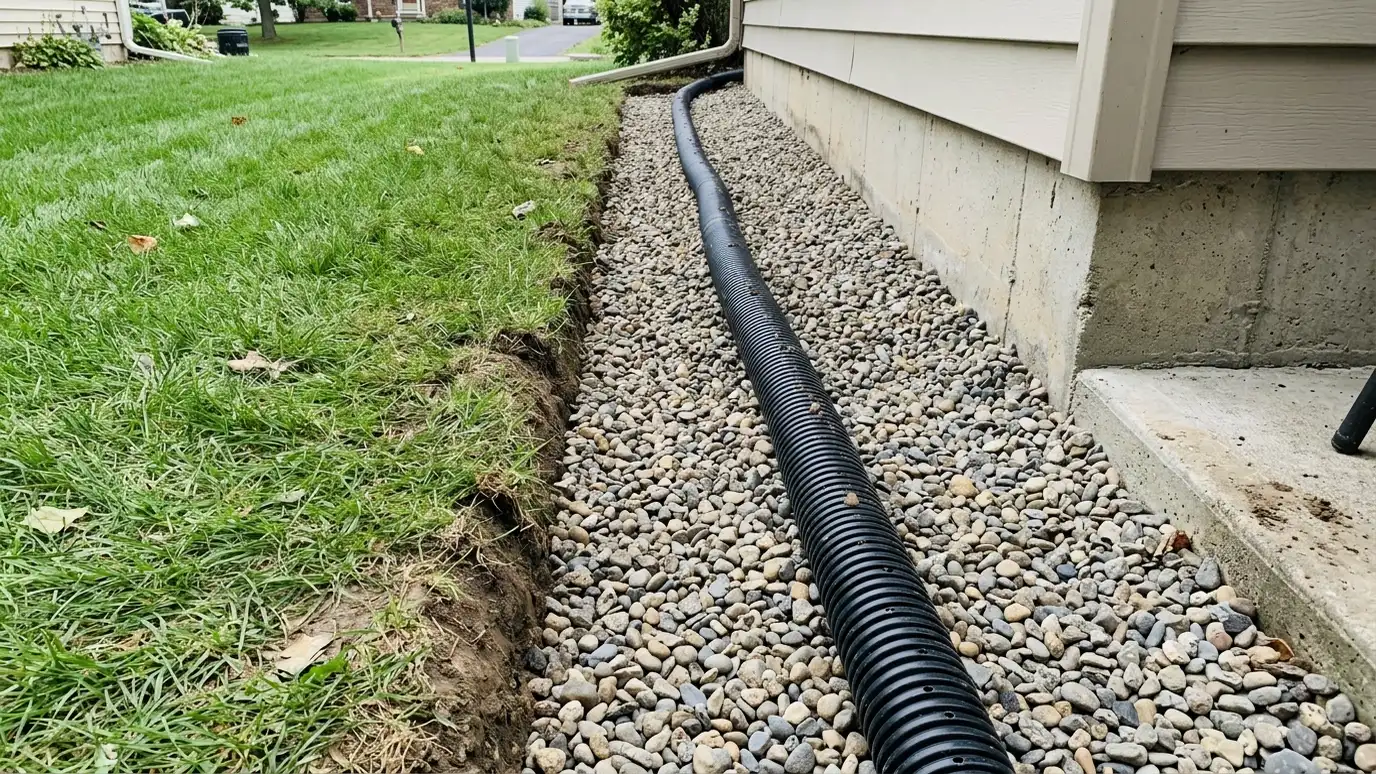 French Drain InstallationFrench drain installation with a sloped trench, fabric, washed stone and perforated pipe that collects soggy yard water…Explore
Tell us about your property and we will call you back to set up a visit.
Or call (615) 357-7797 to talk now.